bluename
 Hibiscus Winter Light Requirements: Grow Lights for Dark Rooms
Winter is here, and my once-vibrant hibiscus, sitting in my dim north-facing living room, has started telling me a sad story. Its lush green leaves are looking a bit pale, flower buds are dropping before they even think about opening, and its overall posture screams, “I need more sun!” If you’re like me, living in an apartment with less-than-ideal natural light or facing short, gloomy winter days, you know this struggle intimately. Our tropical beauties, hibiscus plants, have specific hibiscus winter light requirements that our dark rooms simply can’t meet. This isn’t just about survival; it’s about helping them thrive and possibly even bloom during the off-season. After hitting this wall year after year, I decided to tackle the problem head-on with a dedicated grow light setup. What followed was a two-week experiment filled with trial, error, and ultimately, a clear path to success.
Understanding the "Why": What Hibiscus Really Needs in Winter
First, let’s be clear: hibiscus are sun worshippers. During the growing season, they crave 6 to 8 hours of direct, bright sunlight. Winter complicates everything. The sun is lower, days are shorter, and light intensity plummets. In a dark room, the problem is magnified. The plant’s photosynthesis slows dramatically. It’s not just about growth stalling; the plant begins to consume its own energy reserves, leading to leaf yellowing, leggy growth as it stretches for any light source, and a complete halt in blooming.
I consulted resources from the American Hibiscus Society (AHS) to confirm my approach. They emphasize that while hibiscus can tolerate slightly less light in winter, “bright, indirect light” is still the absolute minimum for maintaining health. For dark rooms, “bright indirect light” is a fantasy without intervention. This is where grow lights for dark rooms transition from a luxury to an essential tool for any serious indoor gardener.
My Two-Week Journey: From Dim to Vibrant
I committed to a 14-day observation period, documenting changes daily. My subject was a ‘Midnight Marvel’ hibiscus that had already dropped two buds and showed signs of chlorosis (yellowing leaves with green veins).
Week 1: Setup, Adjustment, and Initial Shock
My goal was to simulate a summer day. I learned that not all lights are created equal. Plants primarily use blue spectrum light for foliage growth and red spectrum for flowering and fruiting. A full-spectrum LED grow light, which looks like white light to us, was the ideal choice.
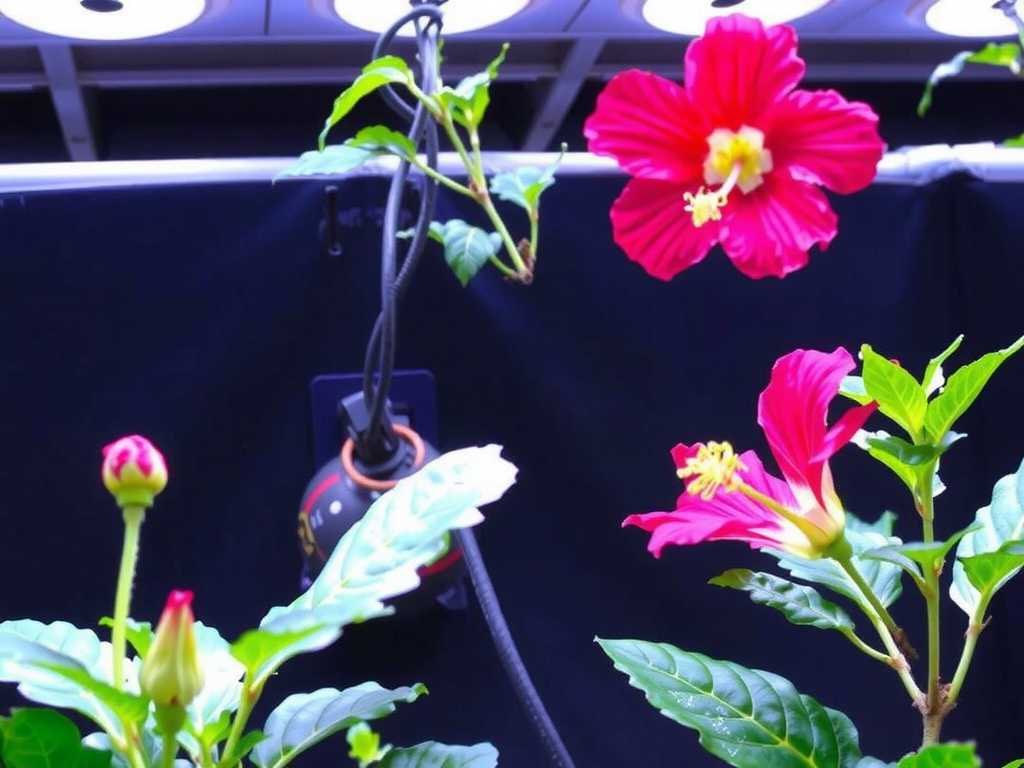
- The Setup: I chose a 24-watt full-spectrum LED panel with adjustable arms. I positioned it about 12 inches above the top of the hibiscus, aiming for a 14-hour daily “photoperiod” using a simple outlet timer (6 AM to 8 PM). This mimics a long summer day, telling the plant it’s still in active growth mode.
- The First Mistake (The "Burn"): On day two, I noticed the very top leaves looked bleached and slightly crispy at the edges. I had made a classic error. Even though LEDs run cool, the light intensity was too high from that distance for a plant already stressed by low light. It was a form of light burn.
- The Fix: I immediately raised the light fixture to 18 inches above the plant. I also learned about the “hand test” recommended by many horticulturists: if your hand cast on the plant’s foliage is a sharp, well-defined shadow, the light is too intense. A soft, slightly fuzzy shadow is the goal. After adjusting, the shadow was perfect.
- Days 3-7: The plant seemed to be in a state of pause. No worsening, but no visible improvement either. This, I realized, was the adjustment period. The plant was acclimating to its new, consistent light source and beginning to ramp up photosynthetic processes.
Week 2: Signs of Life and Recovery
The second week is where the magic started to happen.
- Days 8-10: The most exciting change – the existing flower buds, which I was sure would fall off, stopped aborting. They held firm. Furthermore, the pale green leaves began to deepen in color. The yellowing on older leaves halted; it didn’t reverse on those leaves (damage is often permanent), but no new leaves showed signs of distress.
- Days 11-14: This was the confirmation phase. I observed a remarkable change: new growth. Tiny, deep red buds (characteristic of ‘Midnight Marvel’) emerged at several leaf nodes. This was the plant’s unequivocal signal: “I have enough energy to grow again!” The stems also looked sturdier, and the overall plant posture was more upright, no longer straining sideways toward the distant window.
Choosing the Right Grow Light: A Practical Guide
My experience underscored that choosing the right equipment is half the battle. Here’s a breakdown based on what I learned:
- LEDs are King for Indoor Use: They are energy-efficient, emit low heat (reducing burn risk), and last for years. Full-spectrum LEDs provide a balanced “sun-like” light that supports all stages of growth.
- Wattage & Coverage: Don’t be fooled by wattage alone. Look for PPFD (Photosynthetic Photon Flux Density) maps if provided. For a single hibiscus, a 20-30 watt full-spectrum LED panel or bulb is sufficient. For larger plants or multiple plants, scale up.
- Positioning is Critical: As I learned, start with the light 12-18 inches away. Observe the plant and adjust. Use the hand test. The light should be directly overhead or slightly angled to cover the entire canopy.
- Timing Consistency: A timer is non-negotiable. Hibiscus benefit from a consistent dark period. I run my lights for 14 hours in winter. This consistent schedule reduces plant stress and manages your energy bill.
Beyond the Bulb: Holistic Winter Care with Grow Lights
Adding a grow light changes the plant’s environment, requiring adjustments in other care aspects, a point often reinforced by expert horticultural bodies like the Royal Horticultural Society (RHS).
- Watering: Under effective grow lights, your hibiscus will use water more actively than a dormant, light-starved plant, but still slower than in summer. My mistake in week one was continuing my “low-light” watering schedule. The soil stayed too wet. I reverted to the golden rule: water only when the top 1-2 inches of soil are dry to the touch.
- Humidity: Winter air is dry, and grow lights can slightly increase local evaporation. I placed a shallow pebble tray filled with water near the plant to boost local humidity, preventing the leaf tips from browning.
- Feeding: I held off on fertilizer during the two-week observation. Once new growth was confirmed at the end of week two, I administered a half-strength, balanced liquid fertilizer. The RHS advises against heavy feeding in winter, but a gentle supplement is acceptable if the plant is actively growing under lights.
Common Questions I Had (And You Might Too)
Can I use a regular lamp or fluorescent light? You can, but results will be mediocre. Regular bulbs lack the full spectrum intensity plants need. A compact fluorescent bulb (CFL) in a 6500K “daylight” color temperature can work in a pinch for overwintering (keeping a plant alive), but for promoting health and blooms, a dedicated full-spectrum grow light for indoor plants is vastly superior.
How long should I leave the grow lights on each day? Aim for 12-14 hours. This provides a long “day” that encourages photosynthetic activity without depriving the plant of a necessary rest period. Always use a timer for consistency; our own schedules are too unreliable.
My hibiscus is still dropping buds even with the light. What’s wrong? Bud drop can be multi-factorial. While light is the prime suspect, check for drafts (hot or cold), significant temperature fluctuations, or inconsistent watering. During my trial, stabilizing the environment around the light—keeping the room at a steady temperature and nailing my watering—was crucial to stopping the bud drop completely.
Seeing those new, deep red growth points emerge on my hibiscus after two weeks of dedicated light care was immensely rewarding. It transformed a period of worry and decline into one of active nurturing and success. Meeting your hibiscus’s winter light requirements in a dark room is not just possible; it’s a straightforward process with the right tools and a bit of observation. By providing consistent, high-quality artificial light, you’re not just compensating for a lack of sun—you’re giving your plant a stable, energy-rich foundation to navigate the winter months in robust health, setting the stage for a spectacular bloom when spring finally returns. The journey from dim to vibrant is a clear one, and it starts with flipping that switch.