bluename
 How to Protect Hibiscus from Wind Damage: Staking & Screens
I’ll never forget the sight after that first major summer storm. My prized hibiscus, a stunning ‘Midnight Marvel’ with dinner-plate-sized blooms, was lying nearly horizontal, its main stem bent at a heartbreaking angle. The wind had turned its lush foliage into tattered flags and scattered unopened buds across the patio. That moment of gardener’s heartbreak was my turning point. I realized that protecting these tropical beauties from wind damage isn’t just an optional chore; it’s essential for their health, form, and prolific blooming. Through trial, error, and two weeks of meticulous observation, I perfected a system using staking and screens that has since saved my hibiscus collection time and again.
The core problem is structural. Hibiscus stems, while woody on established plants, can be surprisingly brittle. Strong, sustained winds cause stems to snap, canes to rub against each other (creating open wounds for disease), and roots to rock in the soil, compromising their ability to take up water and nutrients. The goal isn’t to create a rigid, unnatural prison, but to provide flexible support that allows for natural movement while preventing catastrophic failure.
My Two-Pronged Defense Strategy: Staking for Support, Screens for Shelter
I adopted a combined approach. Staking addresses individual plant stability, anchoring the main structure. Screens manage the environmental force itself, diffusing and reducing wind speed before it ever hits the plant. Here’s exactly how I implemented both, step-by-step.
Implementing the Right Staking Technique
The common mistake is jamming a single stake next to the plant and tying it tightly. This can do more harm than good, causing abrasion and failing in strong gusts. Here’s the method I found truly effective.
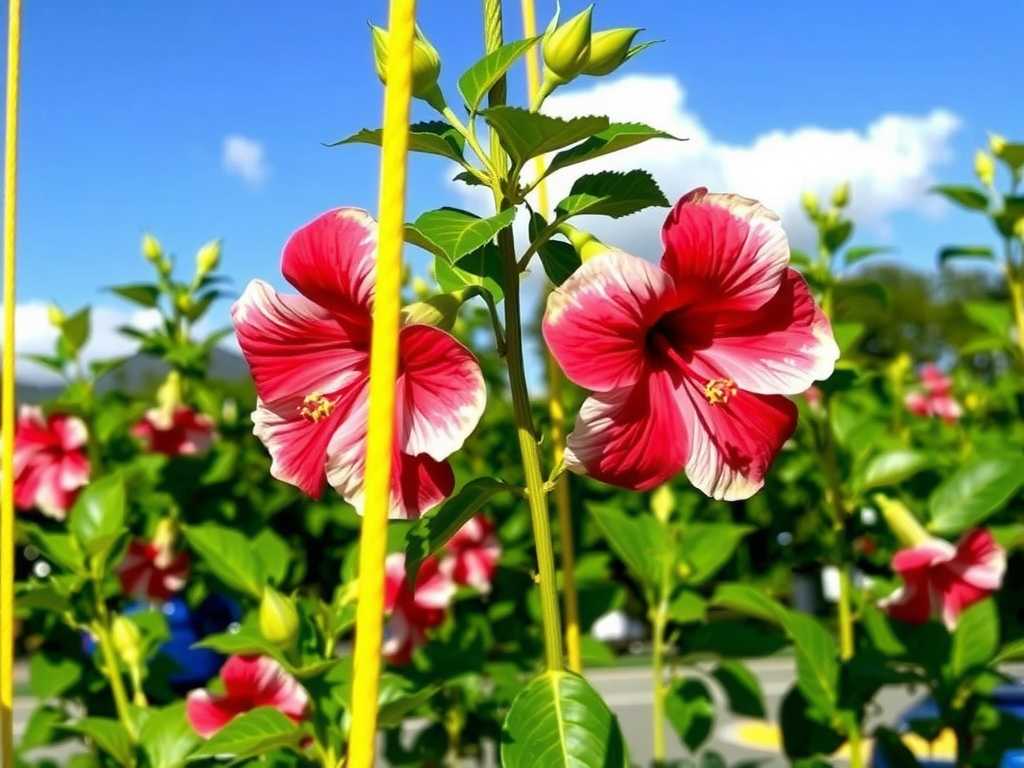
Choosing and Installing Sturdy Stakes For my large perennial hibiscus (Hibiscus moscheutos) and smaller tropical shrubs, I use green coated metal stakes. They blend in, resist rust, and are incredibly strong. For a single-stemmed standard or a key leader, I drive a stake about 12 inches into the ground, 6-8 inches away from the main stem to avoid root damage. The stake height should be roughly two-thirds of the plant’s mature height.
For fuller, multi-stemmed shrubs, the three-stake triangle method is superior. I form a triangle around the plant, about 10 inches from the center, and drive the stakes in securely. This creates a stable perimeter of support.
The Art of Tying: Soft and Flexible This is where I made my biggest initial error. Using wire or rough twine cuts into stems. Now, I exclusively use flexible rubber plant ties or strips of old nylon stockings. They stretch, allowing the plant to sway slightly—which actually strengthens stems—without causing abrasion.
I use a figure-eight loop. The tie makes a loop around the stake, crosses over, and then forms a separate, loose loop around the plant stem. This prevents the stem from being crushed against the stake. I secure ties at the mid-point and again about two-thirds up the plant, never at the very top, which can act as a pivot point.
Building Effective Windbreak Screens
Staking supports the plant, but a screen protects its entire microclimate. I wanted something durable, aesthetically pleasing, and not a solid wall (which can create turbulent downdrafts).
Selecting the Ideal Screen Material Solid fences can force wind up and over, creating damaging vortices on the other side. The Royal Horticultural Society (RHS) notes that windbreaks with 50% permeability are most effective, slowing wind significantly without causing destructive turbulence. Based on this, I chose a lattice panel and a woven willow hurdle.
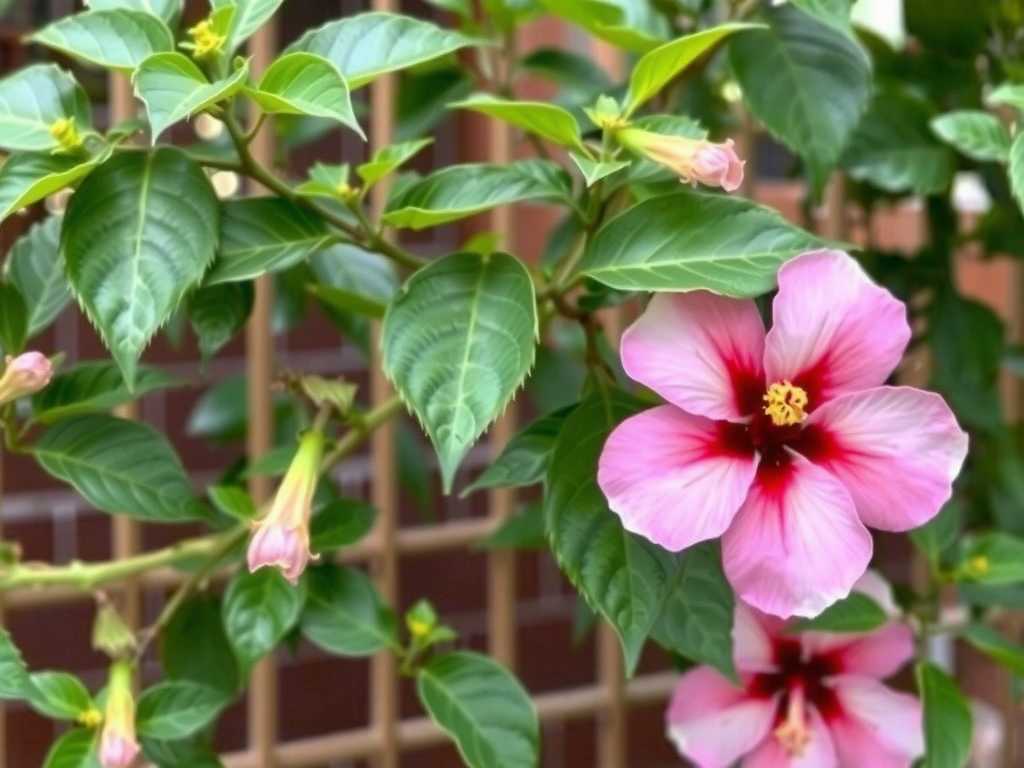
The lattice (about 40% open) is permanent, installed about 3-4 feet away from my main hibiscus bed on the prevailing wind side. The willow hurdle is lighter and movable, which I use for potted tropical hibiscus on the deck.
Strategic Placement for Maximum Benefit Placement is critical. A windbreak protects an area roughly 5-10 times its height. My 4-foot lattice panel shelters my bed for about 20 feet downwind. I ensured it was not placed too close to the plants, as recommended by the American Horticultural Society (AHS), which advises allowing space for air circulation to prevent fungal issues. The screen filters and diffuses the wind, turning a damaging gale into a manageable breeze.
My Two-Week Observation Log: What Actually Happened
I installed this system just before a forecasted windy period. Here’s what I observed:
- Days 1-3: Moderate winds (15-20 mph). The staked plants swayed gently as a unit. The lattice screen audibly reduced the wind’s “whoosh.” No leaf shredding was observed on protected plants, while an unstaked, unprotected potted hibiscus showed minor tip damage.
- Days 4-7: A calm period. I checked all ties for tightness. The figure-eight loops had stretched slightly but held firm. No signs of stem girdling.
- Days 8-10: The test: a thunderstorm with gusts up to 35 mph. This was the moment of truth. The willow hurdle around my potted plants bowed but held. Behind the lattice, my garden was remarkably calm. The staked hibiscus bent and danced but remained upright. The main stem I had previously damaged showed no stress at the bend point.
- Days 11-14: Post-storm assessment. Zero broken stems on protected plants. Bud drop was minimal. New growth continued unabated. The contrast was stark: a newly planted, unstaked hibiscus in a less sheltered spot had a pronounced lean and required emergency staking.
The Pitfalls I Encountered and How I Fixed Them
- The “Strangulation” Problem: My first attempt used plastic zip ties. Within a week, I saw noticeable indentations on growing stems. Fix: I immediately switched to stretchy rubber ties and monitored the stems. They recovered without permanent damage.
- Insufficient Stake Depth: One of my triangle stakes in a sandy spot pulled loose in the storm. Fix: I re-drove it 18 inches deep and packed the base with a soil-and-gravel mix for stability.
- Creating a Fungal Hotspot: I initially placed a solid screen too close to a hibiscus, reducing air flow. I noticed powdery mildew starting on the most sheltered leaves. Fix: I moved the screen to the recommended distance and treated the plant with a neem oil solution. The improved airflow halted the mildew.
- Neglecting the Root Zone: I focused on stems but forgot that wind rocks the root ball, especially in containers. Fix: I added a 2-inch layer of mulch (shredded bark) around the base of all in-ground plants. For pots, I grouped them together behind the screen, which drastically reduced wind exposure at soil level.
Ensuring Long-Term Hibiscus Health and Stability
Protection is part of a holistic approach. Proper watering is crucial; wind dries plants out rapidly. I watered more frequently during windy spells, ensuring deep, consistent moisture. A balanced, slow-release fertilizer promoted strong, resilient growth without the weak, leggy surge that comes from excess nitrogen.
Most importantly, I learned to prune for wind resistance. I adopted a practice of selective thinning, removing some interior branches to allow wind to pass through more easily, rather than fighting a dense, sail-like canopy. I also pruned to create a strong, balanced branch structure, removing competing leaders early on.
Addressing Common Concerns from Fellow Gardeners
Can I use bamboo stakes for my large hibiscus? You can for smaller or younger plants, but for mature, heavy-headed perennial or large tropical hibiscus, bamboo often lacks the necessary strength and durability. It can snap or rot over a single season. I reserve bamboo for annuals or very light duty. Investing in metal or thick, treated wooden stakes pays off in the long run.
Will staking make my plant dependent and weaker? This was my fear too. The key is not to over-tie. By using flexible ties and allowing for controlled movement, the plant still experiences some stress, which encourages the stem to thicken and strengthen naturally. The stake prevents catastrophic breakage, not all movement. Think of it as training wheels, not a full-body cast.
Is it too late to stake a hibiscus that is already leaning or damaged? It’s not too late, but act carefully. For a leaning plant, gently straighten it and install a stake on the opposite side of the lean. Use soft ties to gradually pull it upright over a few days, not all at once. For a bent but not broken stem, splint it with a stake and soft ties; it may heal with a knuckle. If it’s snapped completely, prune back to healthy wood just above a leaf node and stake the remaining stem to support new growth.
Seeing my hibiscus now, standing tall and blooming profusely even after windy weather, is deeply satisfying. The combination of thoughtful staking and strategic screening isn’t just about damage control; it’s about creating a stable environment where these magnificent plants can truly thrive. The initial effort of setting up the system is minimal compared to the season-long reward of pristine foliage, uninterrupted blooms, and the peace of mind that comes when the next storm forecast rolls in. Your hibiscus will thank you for the support.