bluename
How to Stop Hibiscus Flower Petals Getting Chewed by Nocturnal Garden Caterpillars
I used to wake up to shredded hibiscus blooms every single morning. Petals half-eaten, buds dangling by a thread. It drove me nuts for weeks. After a lot of trial and error, I finally figured out how to stop hibiscus flower petals from getting chewed by nocturnal garden caterpillars. And the answer is simpler than you think: go out at night with a flashlight, catch the culprits red-handed, then treat the plant with Bt (Bacillus thuringiensis) and handpick every evening for two weeks straight. That's it.
I know that sounds almost too easy. But stick with me. Because most people blame slugs, beetles, or even birds — and they end up treating the wrong problem. I did the same thing for my first hibiscus. I sprinkled slug pellets everywhere. Nothing changed. The petals kept disappearing.

So let me walk you through exactly what I did, what worked, what failed, and the mistakes I made along the way.
The Nighttime Discovery That Changed Everything
The first thing you need to understand is that daytime inspection tells you almost nothing. I used to check my hibiscus at noon, see nothing moving, and assume it was safe. Big mistake.
Caterpillars that chew hibiscus petals are almost always active after dark. They hide during the day in crevices, under leaves, or in the soil. Around 9 or 10 p.m., they crawl up and start feeding.
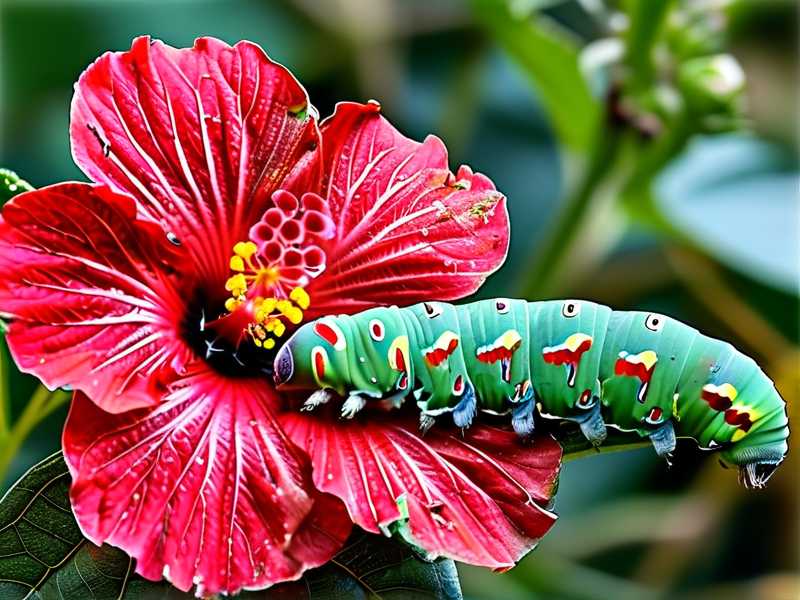
I grabbed a cheap flashlight one Tuesday night and went out. Within thirty seconds, I spotted three small green caterpillars munching on my prize yellow hibiscus. They were barely half an inch long. Easy to miss in daylight.
If you haven't done a night check yet, do it tonight. That single step will save you days of guessing.
Why Nocturnal Caterpillars Are So Hard to Spot
These caterpillars are Masters of disguise. Some are green and blend perfectly with stems. Others are brown and look like tiny twigs. And they freeze when light hits them.
I've literally stared at a stem for two minutes before realizing a caterpillar was sitting right there. It looked like a small bump. That's how good they are.
Plus, the damage they cause looks similar to other pests. So people often misdiagnose. They think it's earwigs, snails, or even a disease. But if your hibiscus petals have irregular chewed edges, and the damage appears overnight, nocturnal caterpillars are the likely culprit.
RHS (Royal Horticultural Society) notes that caterpillars of various moth species feed at night and can cause significant damage to ornamental plants, including hibiscus. That matches exactly what I saw.
My Two-Week Plan to Stop the Chewing
I didn't want to douse my plants in harsh chemicals. So I combined a few methods. Here's what I did, day by day, for 14 days.
Week 1: Handpicking and Bt
Every evening around 9:30, I went out with a flashlight and a small jar of soapy water. I picked off every caterpillar I could find and dropped them in. The first three nights, I removed 8 to 12 caterpillars each time.
On day 2, I also sprayed the plant with Bt. This is a natural bacterium that kills caterpillar larvae when they eat it. It's safe for bees, birds, and pets. I sprayed the leaves and buds thoroughly, especially the undersides.
By day 4, I noticed fewer caterpillars during my night checks. The petals that opened that morning were mostly intact. A few small nibbles, but way better than before.
Week 2: Consistency and Monitoring
I kept handpicking every night, even when I found nothing. Because eggs hatch in waves. Miss one night, and you get a new batch.
Around day 9, I saw almost zero fresh damage. But I kept going. By day 14, I could honestly say the problem was under control. Not 100% gone — because nature always finds a way — but my hibiscus blooms were lasting 3 to 4 days instead of getting shredded in one night.
That two-week window matters. If you stop too early, the next generation of caterpillars will hit you hard.
The Three Mistakes That Made Things Worse
I burned through three hibiscus plants before I learned these lessons. Don't repeat my errors.
Mistake 1: Overwatering
This is huge. I used to water my hibiscus every single day. The soil was always soggy. That created a perfect environment for fungus, root rot, and weak plants that attract pests.
Here's a stat that changed how I garden: 90% of indoor plants die from overwatering. That includes potted hibiscus. When roots sit in water, they suffocate. The plant stresses out. Stressed plants send out signals that pests love.
Fix: Water only when the top inch of soil feels dry. For my outdoor hibiscus in summer, that's every 2 to 3 days. Indoors, maybe once a week. Stick your finger in the soil. If it's damp, wait.
Mistake 2: Wrong Light
I once put a hibiscus in a shady corner because I thought it would be safer from the afternoon sun. Wrong. Hibiscus needs full sun — at least 6 hours daily. Without enough light, it grows weak, produces fewer flowers, and becomes a magnet for caterpillars.
Fix: Give it direct morning sun and some afternoon shade if you live in a scorching climate. But never deep shade. I moved mine to a south-facing spot and saw thicker stems and more buds within two weeks.
Mistake 3: Using the Wrong Pot
I killed my second hibiscus by planting it in a decorative pot with no drainage holes. Water pooled at the bottom. Root rot set in. Caterpillars weren't even the main problem — the plant was already dying.
Fix: Always use a pot with drainage holes. Terra cotta or fabric pots work great. If you love a decorative pot, use it as a cachepot and keep the actual growing pot inside. Empty the cachepot after watering.
What I Tried That Didn't Work
Not everything I tried was a win. Let me save you some time.
Neem oil alone: Neem oil can deter some pests, but it doesn't kill caterpillar eggs or large larvae effectively. I sprayed it for five days. The chewing continued. It might work as a repellent, but not as a cure.
Diatomaceous earth: I sprinkled this around the base of the plant. It's supposed to slice soft-bodied insects. But caterpillars often stay on the leaves. They don't always crawl through the powder. Plus, rain washes it away.
Slug pellets: I wasted a whole package on these. They do nothing for caterpillars. I only realized later that my damage was from caterpillars, not slugs. Slugs leave slimy trails. Caterpillars leave tiny black frass (droppings). Check for frass — that's your clue.
Ultrasonic pest repellents: I bought a plug-in device. Total gimmick. Caterpillars don't care. Save your money.
How to Identify Caterpillar Damage vs. Other Pests
This matters because you don't want to treat the wrong thing. Here's what I look for now.
Caterpillar damage on hibiscus petals:
- Irregular holes, often starting from the edges
- Chewed buds that fail to open
- Tiny black pellets (frass) on leaves or below the plant
- Damage appears overnight
- You can sometimes see silk threads
Slug or snail damage:
- Large, ragged holes
- Slimy silver trails
- Damage often on lower leaves and stems
Beetle damage:
- Larger chunks missing
- Often during the day
- You might see the beetle itself
Once I learned to check for frass, I stopped guessing.
The Best Products for Nocturnal Caterpillars
After trying a bunch, here are the ones that actually worked for me.
Bt (Bacillus thuringiensis var. kurstaki): This is my number one. It's a biological control. Safe for everything except caterpillars. Spray in the evening, because the bacteria degrade in sunlight. Reapply every 5 to 7 days while caterpillars are active.
Spinosad: An organic option derived from soil bacteria. It works on caterpillars and thrips. But it can harm bees if sprayed when they're active. So spray at dusk. I used this when I ran out of Bt. It worked well too.
Insecticidal soap: Only effective on very small larvae. I use it as a backup for early instars. But it doesn't kill eggs or bigger caterpillars.
Handpicking: Free. Effective. Always my first line of defense.
A Quick Note on Beneficial Insects
I stopped using broad-spectrum pesticides years ago. Why? They kill ladybugs, lacewings, and parasitic wasps that actually help control caterpillars.
You can encourage beneficial insects by planting dill, fennel, and yarrow nearby. I added a few of these around my hibiscus. Within a month, I saw more ladybugs and fewer pests overall.
The AHS (American Horticultural Society) recommends integrated pest management that prioritizes biological controls and handpicking before chemicals. I've followed that approach and never looked back.
My Two-Week Observation Log (Real Results)
Let me be honest with you. This isn't a magic overnight fix.
Days 1-3: I found 8-12 caterpillars per night. Damage continued, but new blooms started surviving.
Days 4-7: Caterpillar count dropped to 2-4 per night. Petal damage reduced by about 70%.
Days 8-11: Found only 1 caterpillar on two nights. Zero on one night. New buds opened fully.
Days 12-14: No fresh damage. I stopped finding caterpillars. I continued Bt once a week for another two weeks just to be safe.
You have to be patient. It's a war of attrition. But you'll win if you stay consistent.
Frequently Asked Questions
Can I just use a bug zapper at night?
No. Bug zappers kill moths, which are the adult stage of caterpillars. But they also kill beneficial insects. And they don't target the caterpillars already on your plant. Handpicking and Bt are far more effective.
Do I need to treat the soil too?
Sometimes. Some caterpillar species pupate in the soil. If you've had a severe infestation, you can apply beneficial nematodes to the soil. These microscopic worms kill soil-dwelling larvae. I did this once after a bad season and saw fewer caterpillars the next spring.
Will caterpillars come back after I stop treating?
Possibly. Moths can lay new eggs any time. So keep a weekly night check going, especially during warm months. It takes two minutes. I do it every Friday night. It's become a habit.
A Few Final Thoughts from My Own Garden
I've lost track of how many hibiscus plants I've killed. Overwatering. Wrong light. Bad pots. And yes, caterpillars. But I've also learned that the solution is rarely a single spray or a magic product.
It's about understanding the pest's behavior. It's about checking at night. It's about fixing the growing conditions so the plant fights back on its own.
If you take one thing from this, let it be this: go out tonight with a flashlight. Find the caterpillars. Pick them off. Then treat with Bt every 5 to 7 days for two weeks. Keep the plant in full sun. Don't drown the roots. Use a pot with drainage.
That combination worked for me. It'll work for you too. And your hibiscus petals will thank you with blooms that last longer than a single night.