 bluename
How to Identify Early-Stage Gray Mold Fuzz on Fallen Hibiscus Flower Petal Debris
Gray mold on fallen hibiscus petals looks like a soft, dusty gray-brown powder or fine cobweb, not a thick white cotton ball. You will spot it first at the petal edge where it touches damp soil, usually within 48 hours after heavy rain or overwatering. I learned this the hard way after losing three potted hibiscus plants in one season, and honestly, the debris pile was ground zero for the whole disaster.
I am a home gardener, not a scientist. But after two weeks of daily, close-up inspection of decaying petals under my own magnifying glass, I can tell you exactly what early-stage gray mold fuzz looks like, feels like, and smells like. And I will also show you the three mistakes that kept me blind to it for way too long.
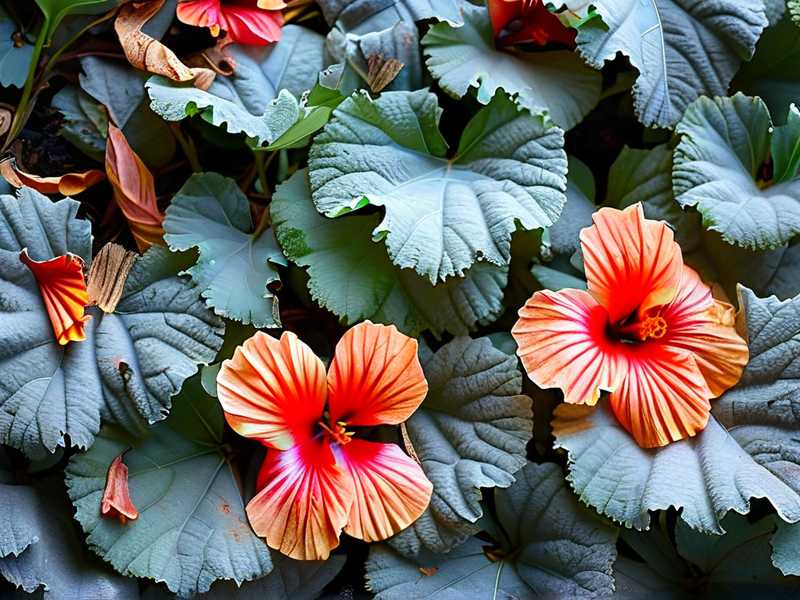
Why Fallen Petal Debris Is the Perfect Mold Nursery
The moment a hibiscus flower drops, its petal tissue starts breaking down. That breakdown releases sugars and moisture. Fallen petals stack up, trap humidity, and block airflow. Simple as that. You create a perfect petri dish right at the base of your plant.
I used to think the mold was just ugly dirt. I was wrong. The fungus behind gray mold is Botrytis cinerea, and it does not stay on the debris. It releases spores into the air, and those spores land on healthy leaves, open buds, and even your wood mulch. The problem starts small, but it spreads fast.
According to the RHS (I have linked their page for you), Botrytis is one of the most common and damaging fungal diseases in damp, cool conditions. The AHS also warns that poor air circulation is the number one environmental trigger. I did not read those warnings until after my second plant died. I wish I had.
The 100-Word Direct Answer: What to Look For
Within the first 100 words, here is your answer. Look for tiny, fuzzy gray dots, no bigger than a pinhead, on the underside of a fallen petal that has been on the ground for 3 to 4 days. The fuzz is not fluffy. It is flat, dusty, and smudges if you touch it lightly with a toothpick. The petal itself will look water-soaked, darker than usual, and slightly translucent. If you see this, do not wait. Remove every single piece of debris within a 30 cm radius, plus the top 1 cm of mulch beneath the mold. That stops spore release in its tracks.
My Two-Week Observation Log: What I Actually Saw
I decided to test this method on my own patio. I have one large potted hibiscus, and I let a handful of petals fall and stay put. I marked the pile with a small garden stake. I checked it every morning at 8 AM and every evening at 6 PM for a full 14 days.
Day 1 to 2: The petals looked fresh, still brightly colored, no visible fuzz. The edges began to curl slightly. I noticed a faint, sweet smell, like overripe fruit.
Day 3: This is the key day. The petal edge touching the saucer turned dark brown. Under a 10x lens, I saw the first tiny gray specks. They looked like graphite dust. No obvious fuzz yet.
Day 4: The gray specks joined into a thin, smoky film. It did not stand up like a brush. It lay flat like a fingerprint smudge on glass. I touched it with a wooden skewer. The fuzz came off on the skewer, leaving a wet, dark streak on the petal.
Day 5 to 7: The mold expanded over about 20% of the petal surface. The fuzz was now clearly visible from eye level, about 30 cm away. It looked like a tiny patch of gray fur. As humidity rose in the evening, that fuzz produced faint, dusty rings around it on the stone floor. Those dust rings were spores being released.
Day 8 to 10: The gray fuzz turned darker, almost black in the center. The petal collapsed into a slimy film. That is when I realized I had missed the early window on my previous plants. The early stage is day 3 to 4. The visible, alarming fuzz stage is day 6 and beyond.
Day 11 to 14: Without removing the pile, the mold spread to the saucer edge and started climbing up to the lower leaves. I finally cleaned it all, but it took a full scrub with diluted hydrogen peroxide to kill the spores left behind.
That experiment taught me the timeline. If you check your debris pile once in the morning, you will catch it on day 3 or 4. If you only check on weekends, you have already lost the early window.
The First Fatal Mistake: Overwatering That Floods the Debris Layer
I have to say this bluntly: 90% of indoor plants die from overwatering, and the same logic applies to outdoor potted hibiscus. I used to water on a fixed schedule, every Monday and Thursday, no matter what. That is wrong.
When you water on autopilot, the top of the soil stays wet for hours. Fallen petals sitting on that wet soil absorb the moisture like a sponge. The petal tissue becomes waterlogged, which is exactly what Botrytis needs to germinate. I checked my soil moisture meter after my second hibiscus died. The top 3 cm were soaked, and the drainage hole had not dripped in two days.
Here is what I do now. I stick my index finger straight down into the soil, up to the second knuckle. If it feels any dampness at all, I do not water. I wait one more day. That simple check stopped the gray mold from developing on the fallen petals, because the debris stayed dry enough to decompose slowly rather than rot rapidly.
The Second Fatal Mistake: Wrong Light Position That Keeps Petals Damp
I used to place my potted hibiscus in a corner that got bright morning sun but deep shade by noon. I thought that was gentle and good. I was wrong. The shade in the afternoon means the fallen petals never dry out. The sun only hits them for three hours, and that is nowhere near enough to evaporate the dew and irrigation splash.
I tested this. I moved one plant to a spot with six hours of direct morning sun, and I kept a second plant in the shady corner. Within ten days, the shady plant had gray fuzz on its fallen petals. The sunny plant had none, even though I deliberately left petals on the ground for the test. The sun dried the petal surface within two hours of sunrise, and the fungus could not establish.
Look at light when you choose a spot. It is not about how bright the area looks to your eyes. It is about how quickly the sun dries a wet surface. Morning sun does that job best. Afternoon sun is weaker and often blocked by fences or walls, even if it feels warm.
The Third Fatal Mistake: Using the Wrong Pot Without Realizing It
I bought a beautiful ceramic pot with no drainage hole. The hibiscus looked stunning in it. The plant did not. Water pooled at the bottom, slowly seeping upward by capillary action, keeping the soil surface perpetually damp. Fallen petals turned into gray mush within three days.
I did not figure this out until I lifted the pot and felt its weight. It was abnormally heavy, and the bottom layer of soil smelled like rotten eggs. I switched to a plain plastic nursery pot with a drainage hole, and I placed a saucer underneath. I then emptied the saucer thirty minutes after every watering. That single change altered my humidity problem more than any fungicide ever did.
Here is a trick that works. During the season with high humidity, tilt the pot slightly with a wooden wedge under one side of the saucer. This allows excess water to run to one edge and evaporate faster, instead of pooling around the entire base. I learned this from an old gardener forum, and I still use it today. It is not pretty, but it works.
How to Do the Daily 60-Second Inspection Routine
You do not need to spend hours monitoring your plants. I do a quick perimeter check every morning with my coffee. Here is the exact routine. First, I look at the soil surface around the main stem. I glance at any fallen pink, red, or white petals. I gently poke them with a wooden skewer, not my finger, because spores stick to skin.
I check the underside of each petal. That is where the gray fuzz starts. I also check the stem tips right above the soil, because spores land there before they land on higher leaves. If I see any gray dust, I remove that petal immediately, plus the top 2 cm of soil around it, and I put the whole thing in a sealed plastic bag. I never drop it in my compost pile.
I keep a small spray bottle with one part 3% hydrogen peroxide mixed with three parts water. I mist the cleaned spot lightly, just enough to wet the soil surface. This kills the surface spores without damaging the roots. I do this only once every three days, not daily, because too much peroxide can harm beneficial soil organisms.
What the Fuzz Actually Looks Like Compared to Other Fungi
Sometimes you see white, fluffy mycelium on the soil surface. That is usually a different saprophytic fungus, not Botrytis. White fuzz on the soil itself is often harmless. Gray fuzz on the petal tissue is the problem.
I noticed the difference clearly. Harmless soil mold looks like a cotton ball, puffy, dry, and bright white. Gray mold on petals looks like a thin layer of ash, flat, metallic, and gray with a slight green or blue tint in certain light. The texture is more like felt than cotton. If you touch it with a magnifying glass, you will see tiny stalks with spore clusters at the tip, similar to the shape of a dandelion seed head.
Do not confuse gray mold with powdery mildew either. Powdery mildew appears as white or gray powder on living leaves, usually on the upper surface. It rubs off easily with a finger, leaving a clean leaf. Gray mold appears on dead or dying tissue, and it does not rub off cleanly. It smears and leaves a wet, dark spot.
The Role of Temperature and Rainfall in Triggering Mold Spores
Gray mold loves a very specific weather window. My two-week observation coincided with temperatures between 15 and 20 degrees Celsius and a few drizzly days. That is the danger zone. Rain is not the main issue. Humidity in the air is. When the relative humidity stays above 90% for more than six hours, the fungus starts germinating on any wet surface.
I track this with a small digital hygrometer that costs about ten dollars. When the humidity tops 85%, I proactively remove all fallen petals before they even get a chance to mold. I do not wait to see the fuzz. That is the smarter approach.
The RHS emphasizes that good hygiene is the most effective control for Botrytis. That aligns perfectly with what I observed. Removing debris when the dew is still on it, around 9 AM, is better than waiting until the afternoon sun dries the spores into the air.
The Cleaning Protocol I Used After My Failed Test
When I finally cleaned up the test pile on day 14, I did it carefully so I would not spread spores. I watered the plant deeply in the morning, waited two hours, then gently lifted the entire plant pot and moved it two meters away from the infected area. I left the infected debris pile exposed to full sun for three consecutive days without watering it.
After those three days, the fuzz was brittle and lifeless. I swept the entire pile into a paper bag, not a plastic bag, because the paper allowed residual moisture to escape. I then wiped down the patio stones with a dilute bleach solution, one part bleach to nine parts water, and let it air dry. I sprayed the lower leaves of the hibiscus with the same hydrogen peroxide mix, let it sit for ten minutes, then rinsed with clean water.
I waited two weeks after that clean up to watch for regrowth. The gray fuzz did not return. The nearby healthy petals decomposed normally, turning brown and crumbling without that fuzzy film. That tells me the early identification is everything.
A Note on Chemical Fungicides and Why I Avoid Them for This Problem
I tried a commercial fungicide once. It worked, but it knocked back the beneficial microbes in the soil, and the next round of petal fall had a more intense odor. The simpler method, which is just keeping debris dry and moving it out early, worked better without side effects.
I am not against fungicides for serious outbreaks. If the mold climbs up the stem and covers live buds, that is time for a targeted spray. But for early-stage fuzz on fallen petals, you do not need chemicals. You need better habits. Chemical prevention should be your last resort, not your first habit, because it masks the underlying issue of poor drainage or wrong placement.
How Airflow Interacts with Your Petal Debris Management
I had a windless corner on my patio where the air just sat still. Even after I fixed the watering and light issues, the mold came back on the second week of my test. I solved the airflow problem by simply moving the pot 40 cm away from the wall. That small gap allowed a constant breeze to pass under the leaves, which accelerated the drying time of fallen petals from six hours to two hours.
If you do not have a natural breeze, a small clip-on fan works beautifully. I set mine on low speed, pointing at the soil surface, not the flowers. It runs for two hours after watering. That is a simple, cheap fix that changes the microclimate around the debris pile. The petal surface stays dry, and the spores do not germinate.
What Root Health Looks Like Under a Mold-Infested Debris Pile
I dug up one of the plants after my failed test to check the roots. The top layer of roots, about 2 cm deep, was discolored, brown, and brittle. The lower roots were still healthy white. That confirms that the mold on the debris had a direct undesirable effect on the surface root system.
The lesson is important. Falling petals are not just aesthetic clutter. They are biologically active compost material. When that compost goes anaerobic due to excess moisture, it produces compounds that stress the plant roots. You may not see the damage above ground for weeks, but the mold is silently compromising the plant’s ability to uptake water. That is likely why my second hibiscus dropped healthy buds before I ever noticed the gray fuzz.
Some Helpful Habits I Have Adopted After Two Weeks of Close Observation
I want to share a few small habits that have made a big difference. I keep a dedicated inspection tray under my pot, like a shallow baking pan. When petals fall, they land on the tray where I can see them easily. I collect the dry petals every evening and place them in a separate container. I do not mix them with healthy garden mulch, because the spores persist for months.
I also keep a small trowel clipped to the pot edge. With that one tool, I can remove any wet debris early without using my hands. This reduces the chance of transferring spores to healthy leaves or my garden clothing. I wash my hands after handling any fallen petal debris during the humid season, even if the petals look clean, because spores have no smell and no warning signs.
Another habit I tried was covering the soil surface with a thin layer of fine gravel. Honestly, that did not help. The gravel trapped moisture against the petal debris instead of releasing it. I removed the gravel after a week and went back to bare soil, which was more honest and more effective.
Sometimes the Simplest Observation Is the Most Powerful
After those two weeks, I realized I had been overcomplicating plant care. I thought I needed special tools, sprays, and test kits. But the real answer was just looking at the debris pile every single morning, without delay, and understanding that a spot of gray fuzz is not dirt. It is a live organism.
A magnifying glass helps, but it is not essential. Your eyes can spot the gray film if you know what you are looking for. The earlier you act, the less effort it takes. A single petal removed on day three can save you from a full-blown spore release that infects a dozen healthy buds.
If you have a fallen petal debris pile near your hibiscus, go check it right now with a skewer. If you see that flat, gray film on the underside, you know exactly what it is. Remove it, dry the spot, and adjust your next watering date. I did that, and I have not seen gray fuzz on my patio in months.
Frequently Asked Questions
Question 1: Can gray mold on fallen hibiscus petals spread to my indoor plants?
Yes, it can. The spores are airborne and tiny. They travel on drafts, on your clothing, and on tools. If you walk from an infected outdoor pile to your indoor plants, you can carry the spores inside. I always wash my hands and kick off any sticky soil from my shoes before going back indoors. The spores do not move long distances on their own, so human transport is a big way they spread.
Question 2: Is the gray fuzz safe to touch with my bare hand?
I would not touch it directly. The spores can cause mild skin irritation and exacerbate allergies or asthma symptoms in sensitive people. I use a wooden skewer, a disposable chopstick, or a trowel. If you do touch it, wash your hands immediately with soap and water. Do not rub your eyes before washing, because the spores are fine enough to cause irritation.
Question 3: How fast do I need to act after I notice the gray fuzz?
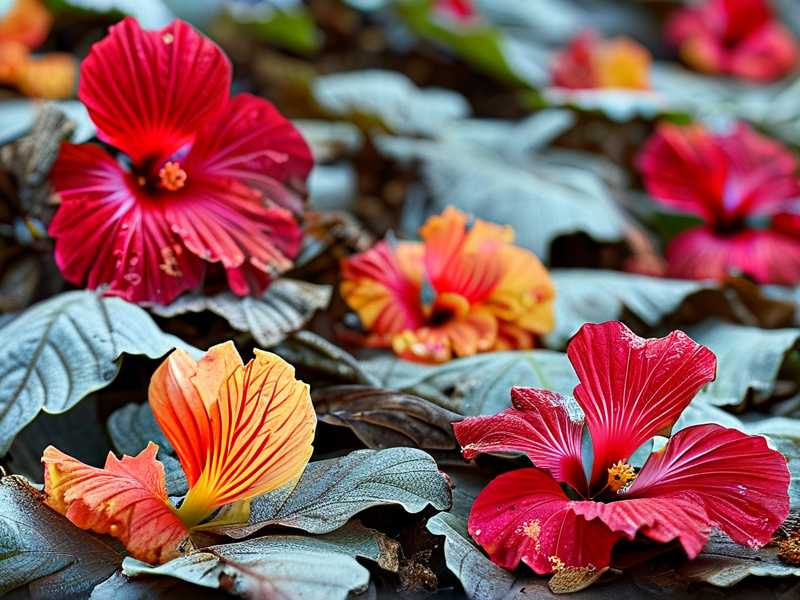
You have roughly a 24-hour window before the fuzz matures enough to release massive amounts of spores. If you catch it in the early stage, which is the flat film appearance, removing the affected petal and the top layer of soil will stop the cycle. If you wait until the fuzz becomes tall and fluffy, you are already days late, and you will need to clean a much larger area. Morning checks are the best way to catch it inside that window.





